Saturday, July 28, 2012


Saturday, June 23, 2012
Update from Dan R
 Update from Dan R: I have a life long friend who has always had two favorite hobbies, gardening and eating. The latter of these caused him to be 60 to 70 pounds overweight and nothing he tried helped him lose any of it. He finally found he no longer could get out and work his gardens so he agreed to try an Advanced Nutrition Program in January. He has stayed on the program and a couple of nights ago he proudly informed me he has lost 55 lbs. and has more energy than he has had in years. He also said he is coming to see me tomorrow to bring me some really hot jalapeno peppers. I can't wait to see him, I'm not so sure about the peppers, but I do know Herbalife has given him back a positive attitude which has been missing for years
Wednesday, June 20, 2012
Fat Forecast: 42% of Americans Obese by 2030
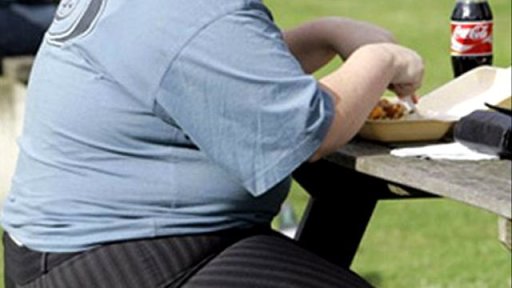
Study: Health costs now $190 b … About 32 million more Americans will become obese by 2030, upping obesity rates to 42 percent of the U.S. population, according to a new report from the U.S. Centers for Disease Control and Prevention. The report also predicts that the proportion of Americans who are severely obese, meaning more than 100 pounds overweight, will reach 11 percent, about double the current rate. The report's authors give a sobering price tag for these predictions: such an increase would create $550 billion of obesity-related health care costs. Eric Finkelstein, one of the authors of the report, said the prospect of such increasing rates, particularly those of severely obese Americans, is alarming since efforts aimed at helping people lose weight have so far proven relatively ineffective. "Their weight continues to increase. Over the last 10 years, it has gone up tremendously," he said in a press conference. "This is a group at great risk of health complications, and yet they are increasing at an even greater rate than the rate of obesity." The report was published in the American Journal of Preventive Medicine and was released at the CDC's Weight of the Nation conference today, a gathering focused on the impact of the obesity epidemic. The authors analyzed data collected from each state and made projections based on a number of factors influencing obesity rates, including the cost of healthy and unhealthy foods, gas prices and Internet access. "Predicting obesity is tricky and no one variable showed up as causing obesity," Finkelstein said. Although recent data suggest that rates of obesity have reached a plateau, current rates of obesity are still alarmingly high. About 34 percent of adults are currently obese, creating a whole host of expensive, chronic health problems, such as cardiovascular disease and diabetes. The report's authors said a number of factors could lead to the predicted rise in obesity. About two-thirds of Americans are currently overweight and could continue to gain weight and move into the obese category. Dr. William Dietz, one of the study's authors and director of the CDC's division of Nutrition, Physical Activity and Obesity, also noted that children who are currently overweight or obese will likely be a major source of the increasing rates. "We know that about 50 percent of severe obesity in adults is consequence of obesity in childhood," he said. Currently about 17 percent of children and adolescents are obese. Anti-obesity measures such as better urban design, access to recreational facilities, workplace health promotion and new drugs could help reign in the problem, the authors noted.
Wednesday, May 23, 2012
Tuesday, May 22, 2012
Tuesday, May 1, 2012
Make Good Decisions: 4 Tips
Make Good Decisions: 4 Tips
Wise decision making is not a constant, research shows. But you can set yourself up for success in these straightforward ways.

Judgement counts. We all make a lot of decisions in business and like to think that we make the big ones with enough time, care and attention that we can be reasonably certain that they are rational, consistent and safe.
But just how consistent and careful are we? How far are our decisions influenced by external trivia? That's the question three business school academics set out to answer when they studied decision making by parole judges.
7 Days to a Healthier You
7 Days to a Healthier You
Don’t put off your health and fitness goals. A week is all it takes to get serious about improving your health. Here’s how:
- Sunday
- Monday
- Tuesday
- Wednesday
- Thursday
- Friday
- Saturday
Buy a pedometer and aspire to meet the American Heart Association’s standard of walking 3,000 steps per day.
Are you out of breath after taking a couple of flights of stairs? Turn stairwells into your fitness friend by choosing the steps instead of the elevator. Whether it’s two flights or 10, watch how quickly your breathing improves.
When you’re trapped at your desk or stuck on a plane, do calf raises. By flexing and pointing—first lifting toes, returning to a flat foot, then lifting your heels and squeezing your calf muscles—you are pumping blood up your legs and improving your circulation.
Give up the perfect parking space. Forever. By parking farther from the store, office or gym, you are burning more calories. Little walks add up.
Eat natural. Take a day to give up processed food filled with preservatives and sodium. Choose food that looks the same as when it was harvested. Stick to the outer perimeter of the grocery store when you shop.
Cool down. Tough week? Take one day to do an activity to soothe your mind. Read a book. Enjoy a sunset. Take a bubble bath. Listen to your iPod.
Let your dog think you’re indecisive. Take your dog for a 10-minute walk, then jog for two minutes. Try a new route. Walk down a different street. Play at a new park.
Subscribe to:
Posts (Atom)